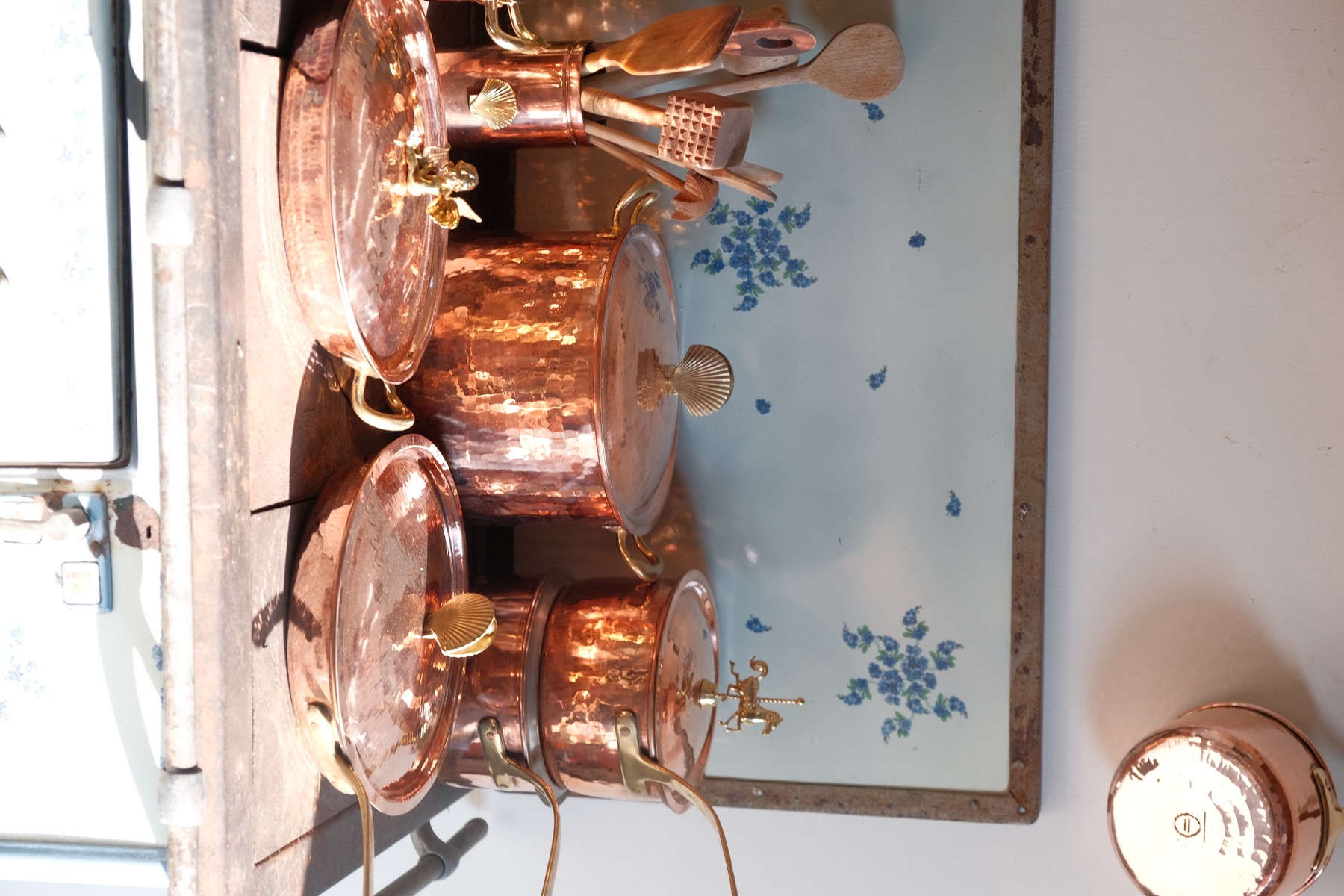
A tin-lined copper pan is made to work hard and to last. The copper moves heat quickly and evenly. The tin protects the food surface. With ordinary care, the pan will darken, deepen, and stay in the kitchen for years.
After cooking, let the pan cool until it is warm, not cold. Wash by hand with mild soap, warm water, and a soft sponge or cloth. Avoid steel wool and aggressive scouring powders on the tin lining. They will scratch the soft metal and thin it before its time.
Dry the pan thoroughly. Water left on copper invites spots; water left on tin does no favors either. A clean towel and a moment on a low burner to drive off the last moisture are enough.
The exterior will change. That is not damage. Heat, air, and the oils of the hand build a living surface. If you prefer a brighter look, a paste of salt and lemon or a copper cleaner made for cookware can refresh the outside. Leave the tin lining alone unless food begins to stick in a new way or bare copper shows through.
When the tin is worn thin after long service, the pan is not finished. Re-tinning restores the cooking surface. That cycle (use, care, renew) is the point of a pan raised by hand: kept, not replaced.
For questions about care or re-tinning, write to the workshop. We are glad to advise on a specific piece.